
A Pretty Little Town
Lucy Maud Montgomery, fifteen years old and the future author of Anne of Green Gables and Emily of New Moon, arrived in Prince Albert at four o’clock in the afternoon on Wednesday, August 20th, 1890 — three thousand miles from her former home on Prince Edward Island. She had taken a passenger train to Regina, which she described as “not a bad little place but the country around it is the nearest approach to a desert of anything I have ever seen.” She then rode in the caboose of a freight train to Duck Lake, and from there almost sixty kilometres northeast by buckboard and wagon across territory “fair and green and fertile-looking,” “jammed with flowers… the prettiest of which were the exquisite little bluebells,” into the city — “a pretty little town — rather ‘straggly,’ built along the river bank.”
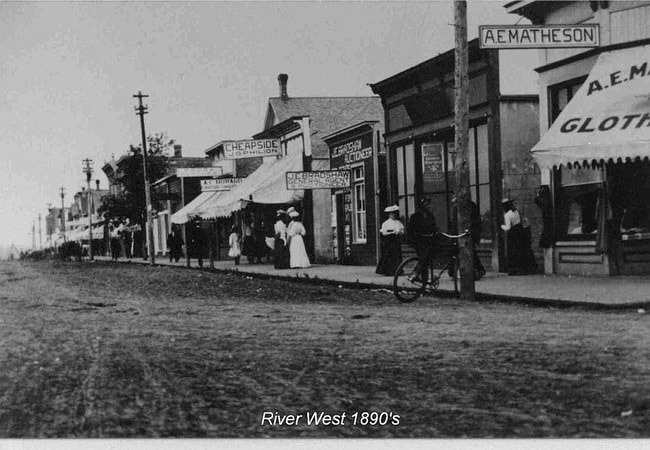
Maud would live in Prince Albert over the next year, with her father, John Hugh Montgomery, and her step-mother, Mary Ann McRae. Homesick, she returned to the island a year later, but not before forming several close attachments — including with “Holdenby and Stevie and Miss Cassie and the McGregor girls.” The McGregor girls were Nellie, Robina, Kate, and Alexina, who all lived in their parents’ home: my 3x-great-grandparents, Duncan McGregor and Amelia Forbes.
P.R. Ritchie described the Prince Albert district in 1892:
The North and South Saskatchewan Rivers, which have their source in the Rocky Mountains, run parallel with each other for a distance of eighty miles, from twenty to thirty miles apart, and join twenty-four miles east of Prince Albert. Between these two rivers, the country is well settled. Settlement began here fifteen years ago, long before railways were dreamed of in the country.
Prince Albert itself is a very old settlement, a mission having been formed here many years ago. To-day it has three lumber mills, two flour mills, and thirty stores. The town is well lighted by electricity, and there is a system of telephones all over it.
In 1878 — long before railways were dreamed of in that country — 28-year-old Pete Campbell rode in to town to stake his claim.
The Campbells
My 2x-great-grandfather, Peter George Campbell, was born to John Campbell and Elizabeth McNaughton on April 25th, 1851, on the family farm in Canada West (Ontario), the fourth of eight children. As Pete’s grandson, Arnold Davis, described, “he came from farming stock.”
Pete’s father, John D. Campbell, had been born in the Scottish Highlands about 1808 to Duncan Campbell and Catharine McNaughton, both from Kenmore, which lay on the far east end of Loch Tay. A mile up the River Tay from the village of Kenmore sat Balloch Castle (rebuilt as Taymouth Castle), the seat of John Campbell, 1st Marquess of Breadalbane. The Marquess was chief of the Glenorchy Campbells, a branch descended from Colin Campbell, the younger son of Duncan Campbell, the 1st Lord Campbell of Argyll. Pete’s father was passionate about his heritage. In his obituary, his friends wrote, “His pride in the ancient and chivalrous clan often found vent in his prime in glowing rehearsals of deeds of prowess enacted by members of it.”
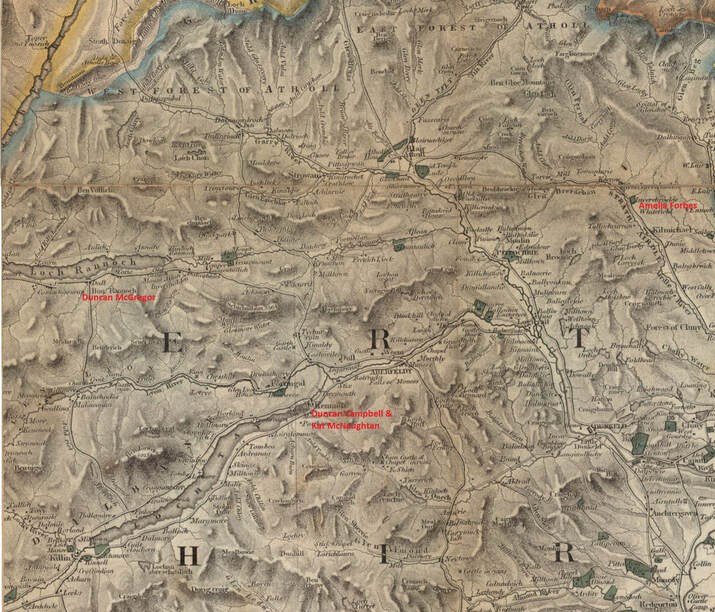
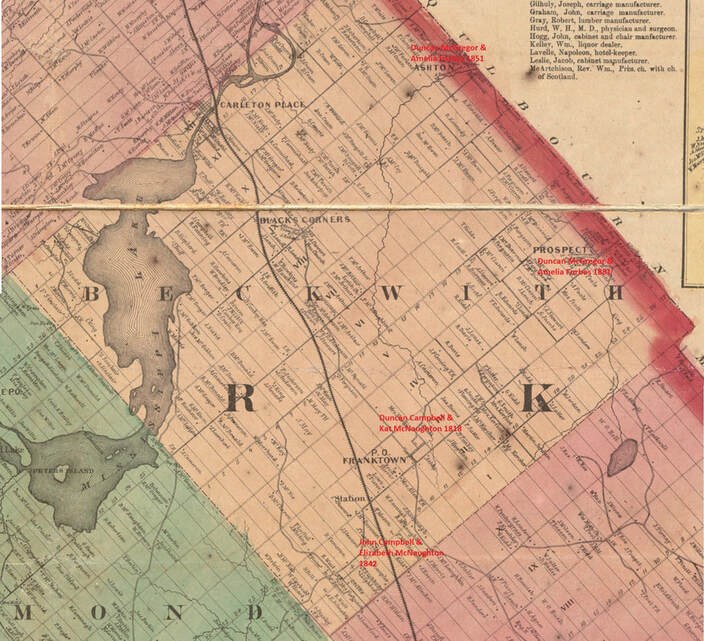
About 1817 or 1818, a man named John Robertson approached farmers around Loch Tay to emigrate to Canada. If the farmers could pay for their own passage to Montreal, the government in Canada would grant them land west of the Ottawa River and assist them with transportation to their homestead. Duncan, Catharine, and their children John, Elizabeth, and Jannet accepted the offer and made their way to the port of Greenock, west of Glasgow. On July 21st, 1818, the family boarded the 260-ton brig Curlew with over two hundred other settlers also bound for the Canadian wilderness.
United Empire Loyalists had settled the heavily forested Lanark County shortly after the American Revolution, but the soil was rocky and development had been slow. In 1816, surveyors mapped a region that alternated between dense forest and swamp and named it Beckwith Township, after the Quartermaster General of Canada. The Curlew’s families made their way up the Ottawa River on barges, debarking at Point Nepean; after the men cut a trail into the new township, the families gathered their belongings and moved in to establish their homes. Duncan Campbell was among the first to stake his claim — to the northeast quarter of lot 11 in concession 4.
Those early days were harrowing for the Scots. Jessie Buchanan, the daughter of the new Gaelic-speaking Presbyterian minister, described the scene in 1822:
Millions of mosquitos and black flies added to our discomfort… No one dared venture far at night, for wolves prowled around the house in darkness, uttering most dismal howls.
Duncan and Catharine had to clear forest to build a home. Buchanan described shanties “chinked between the logs with wood and mud, often without a window, cold in winter, stifling in summer, uninviting always.” With no way to pull the stumps, settlers planted their crops around them, using a “cumbrous plough, hard to pull and harder to guide,” and harvested from daylight until dark with sickle and scythe. The women’s days were harder still:
Besides attending to the children and household affairs, all spring and summer they worked in the fields early and late, burning brush, logging, planting and reaping. Much of the cooking, washing, and mending was done before dawn or after dark, while the men slept peacefully… young mothers took their babies with them — babies were by no means scarce in Beckwith — to the fields and laid them in sap-troughs, while they worked near by.
Pete’s mother, Elizabeth McNaughton, was born about 1815 in Scotland and may have belonged to one of the McNaughton families who settled near the Campbells. Duncan McNaughton had arrived on the brig Fame in 1816 with two young daughters, settling in Beckwith, and he may have been her father — though she may also have belonged to one of the related McNaughton families in neighbouring Drummond County. Either way, she grew up facing the same hardships as her future husband.
Elizabeth and John Campbell married on September 30th, 1842. They obtained a farm near Duncan and Catharine and had their first child, Catherine, in 1843, followed by Margaret, Duncan, Peter, Donald, James, John, and Elizabeth Ann.
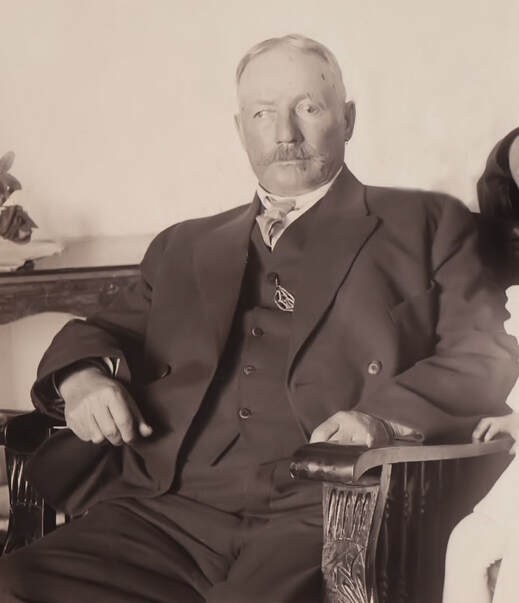
Living on the family farm with his parents and seven siblings, Pete was eager to strike out on his own. As Arnold Davis described:
In 1878 the call of the great untamed North West called him. The North West Mounted Police (NWMP) had been formed in 1873 to provide law and order for the wild west. In 1876 the famous Treaty #6 had been signed between the Cree tribes and some Sioux tribes and the Government.
Glowing newspaper stories may have sparked the call. On February 2nd, 1876, the Manitoba Free Press reported that the North Saskatchewan had “the richest land, dotted with lakes and groves,” with “a very thriving settlement… numbering in all about 1,000 souls.” But Pete could not have believed everything was peaceful out there. On October 15th, 1877, the Ottawa Citizen reported a movement among “the half-breed hunters of the south branch of the Saskatchewan” to send a delegate to Ottawa, protesting government by a council that did not represent them — and noted the prevailing belief that the country “was not duly ceded to Canada by the Hudson Bay Company, but only Manitoba.”
Pete was riding into a country whose ownership was, in every sense, unsettled.
Departure
Pete departed for Winnipeg in May 1878. He was joined by Thomas Feely, the husband of his sister, Catharine. Tom, Catharine, and their one-year-old daughter, Elizabeth, had already lived out in the Western Extension of Manitoba, in the Turtle Mountain district, so Tom knew the lay of the land — at least to Fort Ellice on Manitoba’s western border.
There wasn’t yet a rail line from Ottawa to Winnipeg. For three days, Pete and Tom journeyed by boat and train through Fisher’s Landing, Minnesota, to Emerson, Manitoba, then bought a team and wagon for the last hundred kilometres. As they rode out of Minnesota, the undulating forests and well-cultivated fields gradually gave way to flat, treeless, unbroken prairie. Pete must have feared at first that it was only endless miles of wild grass — then been surprised by fields of blue harebells, red lilies, and white anemones. As the trail dropped into the valley, the ground turned swampy, the ditches on either side filled with brackish, dark red water. They had arrived in the Red River Valley — the gateway west, and the most contested ground in the country.
Winnipeg
By the time Pete and Tom reached it, the scatter of buildings near Fort Garry had incorporated as the City of Winnipeg, gateway to the new North-West Territory. They drove their team into St. Boniface, the small settlement across the Red River. Thomas Osborne Davis, who would later serve as a member of parliament and senator for Saskatchewan, described his own arrival:
I crossed the river on the old cable ferry and went to a little hotel. It was a little old board shack… The old Hudson Bay Fort was there with palisades and store houses, and everything was in its original state. There were cannon and everything else in the fort. The city was just a straggling street of shacks and little board houses. The most pretentious building in the city was the little old Queen’s Hotel… and all back of it was simply like a swamp.
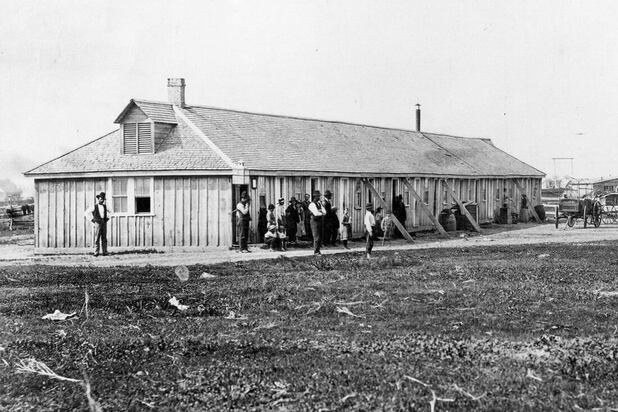
Winnipeg’s hotels were often full by the end of May, and migrants could stay a week in the immigrant sheds at the Forks, the confluence of the Red and Assiniboine. Up to five hundred settlers crammed into the two sheds — a hotbed of scarlet fever and smallpox in summer — with a cookhouse next door to keep fire from the living quarters and unheated bath houses alongside. If the sheds and hotels were full, the government pitched tents at the nearby barracks.
During their stay, Pete and Tom joined up with a new friend, Jack Black Mack, the son of Scottish immigrants from Canada East (Quebec). The three sold their teams and wagons and each bought an ox and cart and a saddle horse, possibly Red River Carts at $10 apiece from Archibald Speers on Thistle Street. Built entirely of wood and animal hide on two five-foot wheels, the carts were easy to repair and light enough to float across rivers — the lifeblood of the western economy. Loaded with flour, salted bacon, tea, bison hides, feed oats, and a supply of wood and shaganappi, the men set off down the trail toward Prince Albert.
The Founding of Prince Albert
Prince Albert was only a dozen years old when Pete started west. In 1866, the Scottish-born Rev. James Nisbet, with the Scottish-Cree Métis John McKay and George Flett, set out from the Red River Colony to found a Presbyterian mission on the banks of the North Saskatchewan. Their avowed purpose was to convert the Nêhiyaw, Nakota, and Ojibwa and to serve as a centre of “civilized” education. (The British called the Nêhiyaw “Cree” and the Nakota “Assiniboine,” names borrowed from French fur traders, who had picked them up from their Ojibwa allies.)
They chose a site a short boat ride down the river from Fort Carlton. The local Cree were hostile, presciently fearing the mission would draw settlers onto their land; after two days of negotiation they relented when George Flett claimed a right to settle, based on his own Cree heritage. Nisbet named the settlement Prince Albert, honouring Queen Victoria’s late consort — and hoping, perhaps, to curry official favour.
The settlement quickly became an agricultural enterprise. By 1871, 20 Scots and 146 Scottish Métis farmed around it; by 1874 it held 300 inhabitants, and with Treaty 6 it would soon expand even faster.
The Long and Muddy Road
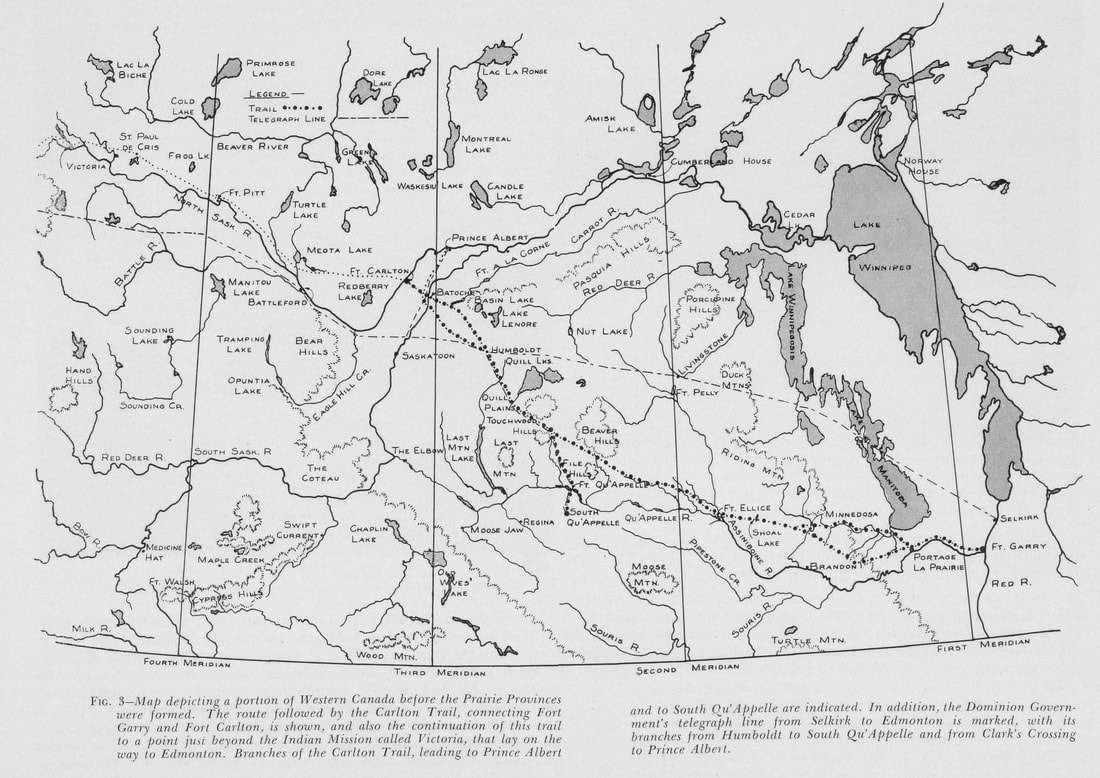
Pete, Tom, and Jack set out from Winnipeg in late May or early June, along the old Carlton Trail — little more than two deep ruts in the hard prairie soil — likely walking or riding alongside their heavily laden carts. At day’s end they gathered dry wood for a fire and skimmed water from a slough; in dry weather they slept under the carts, in wet they pitched a tent, and when a cart broke they mended it from their own store of wood and hide. Thomas Davis, who made the same trip two years later, remembered:
On the first night we camped near old Sandy Murray’s. We had a great time with the wild steers, and it was raining very hard; I rolled up in my blanket and got under the cart. When I woke up in the morning I was lying in six inches of water; that was in September ‘80.
Pete, Tom, and Jack had their share of rain and mud over the next six weeks. Davis again:
It was a continual case of stick and unload and reload the carts. Sometimes we did not make three miles a day… At one place in the middle of the plain we got stuck… We had to take the wagon to pieces. We took the wheels off to get it out of the mud. It took us ten days to get across that plain. It was hard work day and night.
Pete later spoke of the many streams they had to ford. “The country was full of water from one end to the other,” Davis recalled, “and the creeks were bank high. On the Pheasant Plains at one place we were a whole day getting over a creek.”
At last the trail brought them to Batoche, a settlement of over 500 Métis grown up around the trading post of Xavier Letendre dit Batoche, who also ran the ferry across the South Saskatchewan.
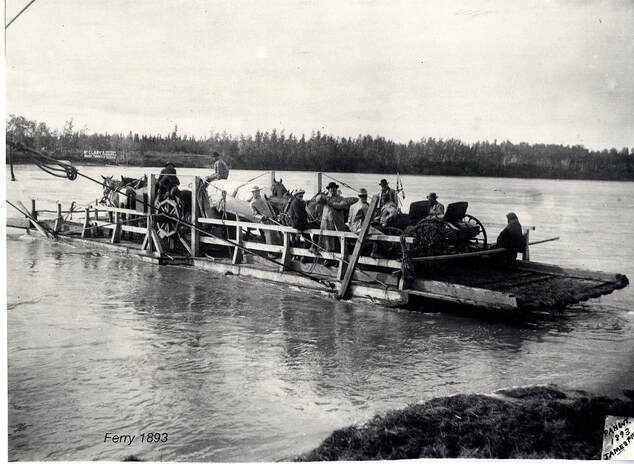
Two years later, Davis described that ferry:
The mode of crossing the river in those days was to track (tow) the ferry up. A man got in the boat with a pole, and another man got a long rope and tracked it away up the river; then he would load on three or four carts, push the ferry out, and start with two big oars and row… He would keep going down-down-down and would take us a mile down the stream before we landed on the other side. Then you had to track the ferry back again with a rope up stream. The ferry was a scow made of lumber that had been whip sawed at Batoche.
Once across, the road to Prince Albert was comparatively easy. They arrived on July 12th, 1878.
Arrival
By 1878, Prince Albert had grown to over 800 inhabitants, its shacks and log houses strung along the river. When Pete arrived there was a blacksmith, a trading post, a doctor, and several schools and churches; over the next two years, merchants, lawyers, carpenters, and even watchmakers would set up shop. As a Presbyterian, Pete may have sought out the church Davis remembered — “a little log Presbyterian Church” with a palisade around the old mission house at Central Avenue and River Street, served by a circuit-riding preacher on a pony.
With no land to farm yet, Pete sought wages. Farming and logging kept the mills running non-stop; later in 1878, Captain Henry Steward Moore and Day Hort Macdowall built a grist and lumber mill that would employ Pete for some time. While he worked, he scouted for a claim. Land here had been disputed for years — settlers against the HBC over the bounds of its Fort Albert property, against the Cree and Ojibwa over reserve boundaries, and against Ottawa over the survey itself. Many settlers were Métis, and the Red River Valley was fresh in memory.
Fortunately, by the time Pete rode into town the government was completing a river-lot survey and opened a Dominion Land Claims Office that September. He found his future home: a 160-acre river lot on the north bank of the South Saskatchewan, 25 kilometres south-south-east of Prince Albert, next to the Muskoday Nation. He could not file yet — the office was not accepting claims — but under the 1872 Dominion Land Act a homesteader could eventually register a quarter-section for $5 and prove it within three years by improving the land. Pete had one more thing to do before starting that clock.
The McGregors
Pete returned to Lanark County in the fall of 1879 with important business in mind: 21-year-old Emma Jane McGregor, eldest child of Duncan McGregor and Amelia Forbes.
Emma’s father, Duncan, had been born in Perthshire on April 24th, 1828, to Robert McGregor and Elizabeth McGibbon, and baptized the same day at the parish church in Fortingall. His mother died before his tenth birthday, and his father — an innkeeper and miller — raised Duncan and his sister Christian in the milltown of Daloist on Loch Tummel. Duncan mastered carpentry and worked as a cartwright, building and repairing wagons and carts.
Emma’s mother, Amelia Forbes, had been born in Blair Atholl, Perthshire, on April 16th, 1834, to Charles Forbes and Helen Ferguson. Like Duncan, she lost her mother young. She became a dressmaker, living with her widowed father and four sisters at a cottage called Inverchroskie House in the hamlet of Enochdhu; her father was one of the gardeners at Dirnanean House, the ancestral home of the Small family. Records of a Forbes family in Moulin reach back several generations.
Likely in the region for work, 27-year-old Duncan courted 20-year-old Amelia, and they married in Moulin on January 16th, 1855. With three sisters married, her youngest sister sixteen, and her father healthy and employed, Amelia left with Duncan for Canada. They settled first in Ashton, a busy Lanark County village, then Duncan tried farming, then took up his trade again in nearby Prospect. Their family grew quickly: Emma Jane in 1858, then Charles Forbes, Duncan Alexander, Nellie, Robena, Kate, Alexina, and Adele, the youngest, in 1875.
Scottish culture in Lanark was devoutly Presbyterian and very literate — families read their bibles and kept libraries of weighty classics like Gibbon’s Roman Empire and D’Aubigné’s History of the Reformation. Both Peter and Emma would have attended school until thirteen or fourteen, drilled in geography, grammar, reading, spelling, and arithmetic by no-nonsense disciplinarians. With the McGregors in Prospect and the Campbells near Franktown, the two lived only fourteen kilometres apart; how they met isn’t certain, but church and social events gave them every chance.
On April 5th, 1880, beneath the vaulted ceiling of the Methodist Church in Smiths Falls, Ontario, the grey-haired Reverend George H. Davis married 29-year-old Peter Campbell and 21-year-old Emma Jane McGregor.
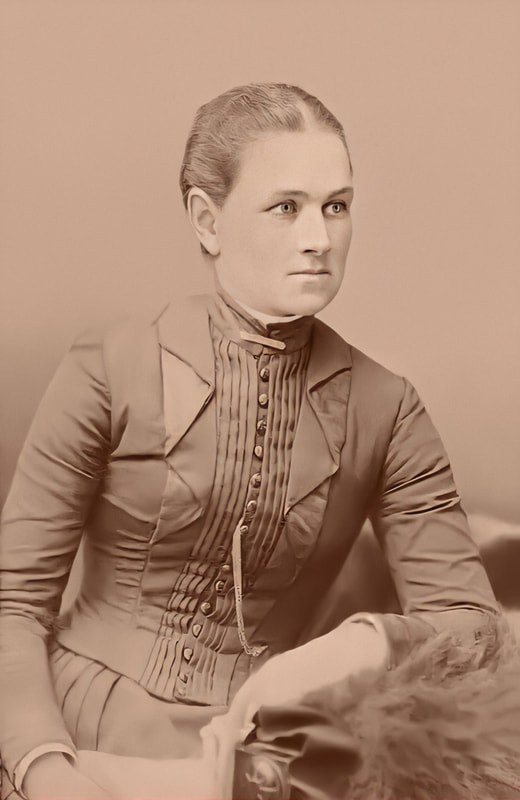
Pete and Emma wasted little time returning to Prince Albert, this time with Margaret and Will Bell, Pete’s sister and brother-in-law. (Tom Feely stayed in Manitoba with Catharine.) The first leg was easier — the rail line now reached St. Boniface — but the overland haul from Winnipeg was the same as before, and Margaret Bell was at least four months pregnant with two children in tow: four-year-old Ada and two-year-old Alonzo. They all arrived safely. The Bells rented a farm; Pete and Emma went to work on their land, building a house and barn and breaking the soil, which was rich in lumber along the river. The Dominion Land Office still wasn’t accepting claims, so they were effectively squatting — as was every other settler. By June, Emma was expecting their first child. Three would arrive in the first half of the decade: John Duncan Lorne (b. 1881), Charles Forbes (b. 1882), and Olive Esmeralda (b. 1884).
Neighbours: The Muskoday
Peter and Emma had close Indigenous neighbours. The Muskoday Nation — also called the John Smith Reserve, after Chief John Smith (Mist-ti-koo-na-pac), who had signed Treaty 6 — lay just across from their land. The Muskoday were Saulteaux, one of the Ojibwa peoples; their name meant “No Trees.” They had come to the South Saskatchewan from Manitoba after the Red River troubles, farmed grain and raised cattle, and had converted to Anglicanism. Settlers relied heavily on Indigenous labour, routinely hiring young men from the reserve — and so much labour was needed that other groups travelled to the area for work, including a large band from Dakota.
Duncan and Emma Come West
In 1883, Pete travelled back to Manitoba to meet Emma’s family, who had decided to move to Prince Albert. Duncan and Amelia were now in their fifties; the boys, Forbes and Duncan, were 23 and 21, and the girls — Nellie, Robena, Kate, and Alexina — ranged from 18 to 13. The youngest daughter, Adele, who would have been 8, died before the 1891 census, so she may or may not have made the journey. They travelled by buckboard with a wagon for their belongings; the age of the Red River Cart was quickly fading.
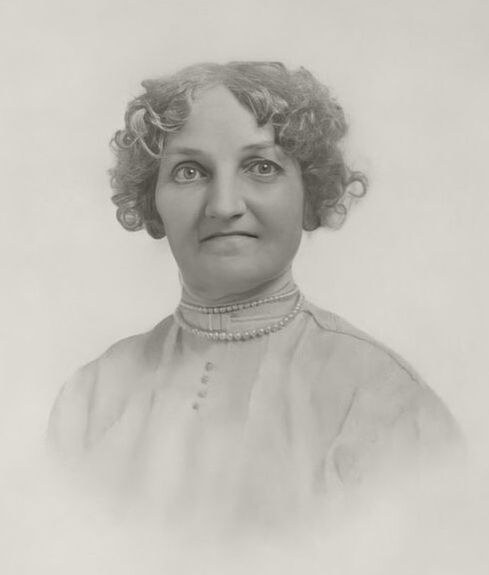
The McGregors settled in town, where Duncan worked as a contractor, building many of its homes and stores. Forbes McGregor worked as a teamster, hauling goods to and from Winnipeg; Duncan Jr. joined his father’s carpentry; and the girls all studied to become teachers.
Winter of Discontent
The Prince Albert settlers were profoundly unhappy. Pete and Emma had been fortunate — they had settled in July 1880 and filed their claim successfully on July 6th, 1882 — but the Land Office denied many of their neighbours, setting land aside for the railroads. Those settlers could buy their farms at $2 an acre but could not claim them under the Homestead Act at $10 for 160 acres; some old-timers who hadn’t improved their land were refused outright; and the Métis argued they should be granted land on the same terms as at Red River. The grievance cut across every line — white and Métis, French and Anglo — and they had hard reasons to stand together: banks wouldn’t open in a town where almost no one held legal title to offer as security. In October 1883 the settlers held a large meeting, formed a Settler’s Union, and sent resolutions to Ottawa. Many in government were sympathetic. Progress was painfully slow.
It got worse. Ottawa had routed the railroad through the south, by Regina, to block American encroachment, dashing Prince Albert’s hopes of a northern line; the government pushed settlement south while neglecting the north, and refused even to let Prince Albert incorporate despite its size. Then, on August 27th, 1883, the eruption of Krakatoa flung ash 80 kilometres into the sky, dropping global temperatures and bringing early-September frosts across Canada. Crop failures bankrupted many farmers around Prince Albert — and were far more catastrophic for the First Nations.
The buffalo were gone from Canada entirely, and the government discouraged people from leaving the reserves to fish and hunt. Some raised barley and oats, but without mills they couldn’t make the flour they needed. After the frost of 1883, starvation and disease became rampant — and yet, despite treaty obligations, Ottawa cut funding rather than raising it. In 1882, when the opposition complained of the growing expense of feeding the Indigenous peoples, Prime Minister Sir John A. MacDonald had answered:
When the Indians are starving… we cannot allow them to die for want of food. It is true that Indians so long as they are fed will not work. I have reason to believe that the agents as a whole… are doing all they can, by refusing food until the Indians are on the verge of starvation, to reduce the expense.
By the desperate winter of 1883–84, even the Prince Albert Times had turned on the policy, writing on April 25th, 1884:
If the white man has by his presence driven away the game which provided the red one’s support, he is morally bound, at whatever cost, to provide a substitute; and even to take the lower ground of economy, it will prove cheaper in the end to feed the Indians than to provide the necessary force to hold them in check, if once goaded past the limit of patience, of which they have proved already that they possess much more than ourselves.
Enter Louis Riel.
(Continued in Part Two.)
Partial Bibliography
- McGill, Jean S. A Pioneer History of the County of Lanark. T.H. Best Printing Company Limited, 1968.
- Abrams, Gary William David. Prince Albert: The First Century, 1866–1966. Modern Press, 1966.
- Rodwell, Lloyd. “Land Claims in the Prince Albert Settlement.” Saskatchewan History, Vol. 19, No. 1, Winter 1966, p. 1.
- Wilson, Garrett. Frontier Farewell: The 1870s and the End of the Old West. University of Regina Press, 2007.
- Russell, R.C. The Carlton Trail: The Broad Highway into the Saskatchewan Country from the Red River Settlement, 1840–1880. Modern Press, Saskatoon, 1955.
- Daschuk, James William. Clearing the Plains: Disease, Politics of Starvation, and the Loss of Aboriginal Life. University of Regina Press, 2013.